Top 10 Take Out Containers for Businesses to Boost Sales?
When it comes to take out containers, businesses face a crucial choice. The right containers can enhance customer experience and influence purchasing decisions. Quality take out containers not only maintain food integrity but also reflect your brand's commitment to excellence.
In today’s competitive market, selecting the best take out containers impacts sales. They come in various materials, sizes, and designs. Each option presents distinct benefits and drawbacks. Knowing these can help you make informed decisions that cater to your target audience. Many businesses overlook the importance of eco-friendly options. Sustainable containers can resonate with environmentally conscious customers and set your brand apart.
Investing time in understanding take out containers leads to better customer satisfaction. It’s not just about functionality; aesthetics also matter. Elegant, well-designed packaging can elevate simple meals into memorable experiences. Choose wisely, and your take out containers can truly boost sales and create lasting impressions.
Essential Features of Take Out Containers for Business Success
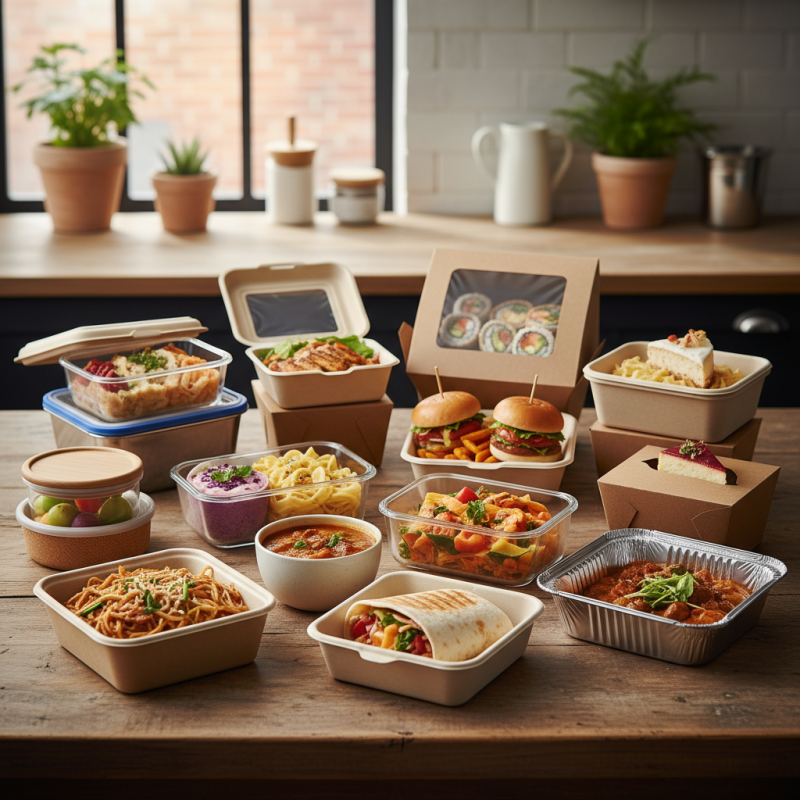
Take out containers play a vital role in business success. They must meet specific needs to ensure customer satisfaction and boost sales. Durable and leak-proof materials are essential. These features help maintain the quality of the food from kitchen to customer. Opt for containers that can withstand temperature changes. This protects hot items and keeps cold items fresh.
Tips: Choose eco-friendly materials when possible. Customers appreciate sustainable options. It can enhance your brand image and attract a wider audience. Additionally, consider portion sizes. An appropriate size helps manage costs and meets customer expectations.
Labels and branding are also critical. Clear labels improve organization and enhance food presentation. Customized containers can create a memorable experience for customers. They can even act as a marketing tool. However, over-branding may feel intrusive, so find a balance.
Ultimately, evaluating the effectiveness of your containers is necessary. Solicit customer feedback to refine your choices. Observe the response to different materials and designs. Make adjustments based on both positive and negative feedback. Investing in the right take out containers can lead to stronger sales and satisfied customers.
Top 10 Take Out Containers for Businesses to Boost Sales
This chart represents the popularity score of different types of take-out containers based on their essential features.
Popular Materials for Take Out Containers and Their Benefits
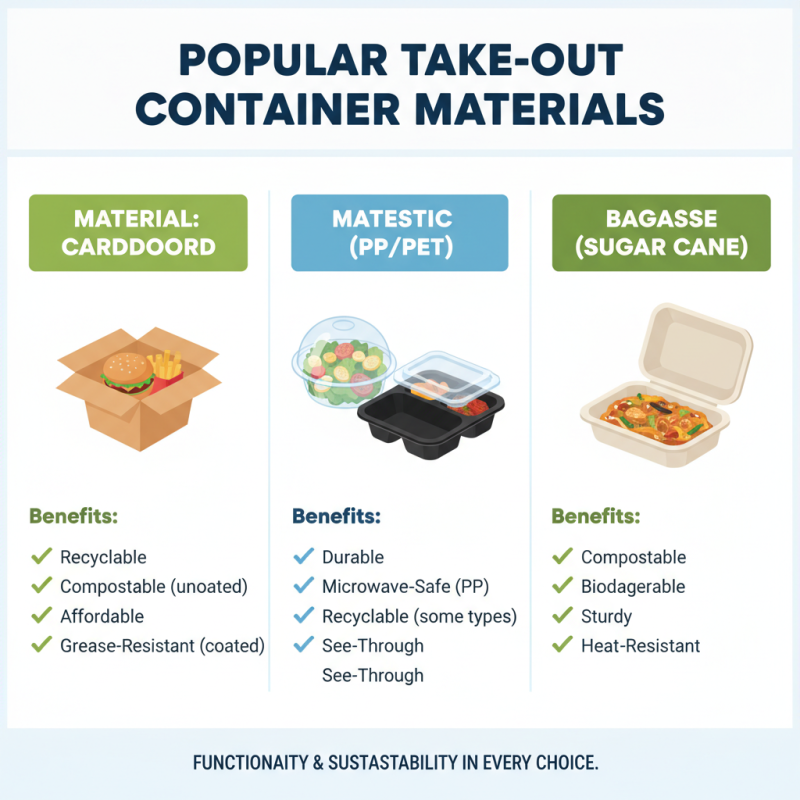
When it comes to takeout containers, material choice impacts both functionality and sustainability. Paper containers, often used for salads and sandwiches, are biodegradable. They are lightweight yet sturdy, making them easy to carry. However, they need a lining to prevent leaks, which can complicate the recycling process. Many businesses face challenges with this.
Plastic containers are another popular option. They are versatile and generally more durable than their paper counterparts. Suitable for various food types, they excel in holding liquids. Yet, concerns about long-term environmental effects persist. Recyclability differs widely, based on the type of plastic. Some establishments opt for compostable plastic alternatives, which require specific conditions to break down.
Lastly, biodegradable materials like corn starch offer a promising solution. They decompose well in industrial settings. While they can be costlier, their eco-friendly image resonates with conscious consumers. However, suppliers often face variability in quality and availability. This inconsistency can lead to unexpected challenges for businesses looking to maintain a sustainable approach while satisfying customers.
Design Strategies to Enhance Brand Visibility on Take Out Packaging
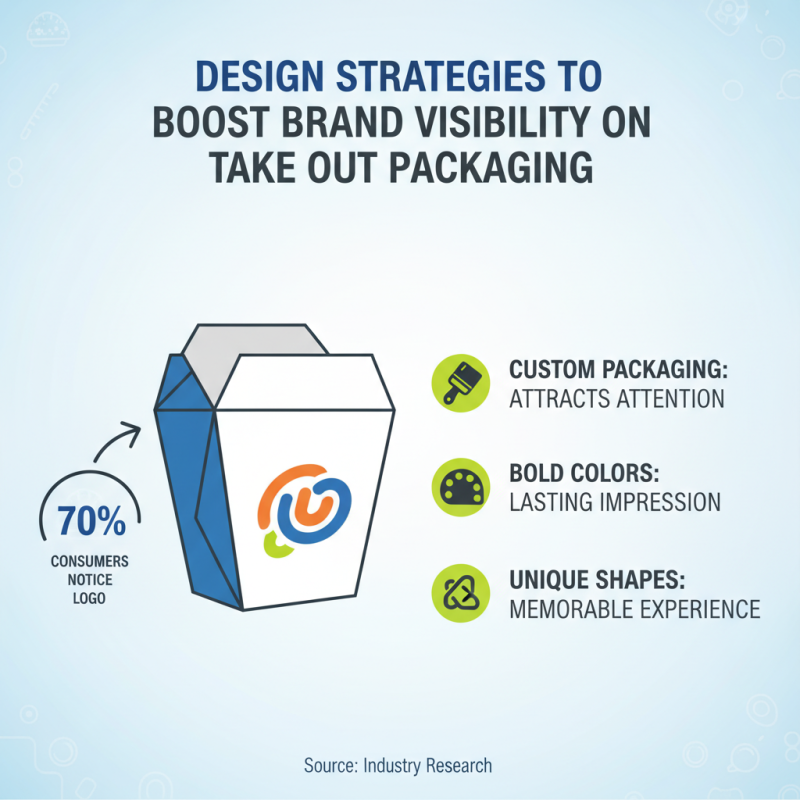
In today's competitive food industry, takeout packaging plays a critical role in brand visibility. Research shows that nearly 70% of consumers notice a brand's logo on their takeout containers. This statistic highlights the importance of effective design strategies. Custom packaging can draw attention and enhance the customer experience. Bold colors and unique shapes can make a lasting impression.
Material choice also impacts brand perception. Eco-friendly packaging resonates with 73% of consumers, who express a preference for sustainable options. Businesses should consider incorporating recyclable materials to attract environmentally-conscious customers. Additionally, designs that feature the story behind the brand can create emotional connections. Consumers are increasingly looking for brands that share their values.
Design elements such as typography and graphics should not be overlooked. Clear, legible fonts help communicate important information quickly. Think about using high-contrast colors for readability. However, brands sometimes miss the mark by overcomplicating their designs. Simplicity often yields the best results, allowing the logo and key messages to stand out effectively. Balancing creativity and clarity is vital for maximizing visibility.
Eco-Friendly Options for Sustainable Take Out Containers
Sustainability is now a key focus for businesses. Eco-friendly take out containers are essential for reducing environmental impact. Many customers today prefer brands that prioritize sustainability. Choosing the right container can enhance brand image and attract new clients.
Biodegradable options are widely available. These containers break down over time, reducing waste in landfills. Look for materials like bamboo, recycled paper, or cornstarch. They are not only eco-friendly but also stylish. Customers appreciate attractive packaging. However, not all biodegradable options perform the same. Some may leak or become soggy. Testing various options can help in finding the best fit.
Reusable containers are another excellent choice. Promoting a container return program encourages customers to bring back their containers. While this concept can involve extra effort, it fosters customer loyalty. Nevertheless, some customers may resist returning them. A creative marketing strategy can help overcome this challenge. Overall, selecting sustainable take out containers can positively affect both sales and the environment.
Top 10 Take Out Containers for Businesses to Boost Sales
| Container Type |
Material |
Capacity (ml) |
Eco-Friendly Rating |
Price ($) |
| Bamboo Bowl |
Bamboo Fiber |
500 |
A+ |
1.50 |
| Sugarcane Container |
Bagasse |
750 |
A |
0.90 |
| Recycled Paper Box |
Recycled Paper |
600 |
A |
0.70 |
| Cornstarch Container |
PLA |
500 |
A+ |
1.20 |
| Reusable Glass Container |
Glass |
800 |
A++ |
4.50 |
| Bamboo Lid Container |
Bamboo & Paper |
400 |
A+ |
1.80 |
| Plant-based Plastic Container |
PLA |
650 |
A |
2.00 |
| Aluminum Foil Container |
Aluminum |
300 |
B |
0.50 |
| Compostable Clamshell |
Bagasse |
700 |
A+ |
1.30 |
Tips for Selecting the Right Sizes and Shapes for Different Dishes
Choosing the right takeout containers is vital for businesses. Various sizes and shapes can influence customer satisfaction. According to the Food Packaging Institute, about 70% of consumers consider packaging when selecting food options. Therefore, selecting appropriate containers can significantly boost sales.
For instance, square containers maximize space and are easier to stack. Round containers work well for salads and pasta dishes. Proper sizing ensures that food remains fresh. Too large a container can lead to waste, both food and monetary. A report by Technomic indicates that almost 60% of customers prefer containers that keep their meals intact.
Additionally, consider environmental impact. Many consumers are leaning towards eco-friendly options. Using biodegradable containers can attract environmentally-conscious customers. However, the challenge lies in balancing cost and sustainability. It can be daunting to find affordable eco-friendly options. Business owners need to assess their customer base and preferences before making decisions. Balancing style, size, and functionality requires careful thought. Each choice can either elevate or detract from the dining experience.