
Lipstick is no longer judged by color alone. The tube in a customer’s hand also communicates quality, hygiene, sustainability, and brand character. According to Grand View Research, the global lipstick market was valued at approximately US$12.3 billion in 2022. The report also projects continued growth through 2030. That growth creates more competition on retail shelves and digital product pages.
Packaging matters.
A well-designed Lip Stick Tube must protect the formula from heat, moisture, friction, and contamination during daily use. It should also support smooth application without excessive product waste. Smithers’ sustainable packaging research highlights growing pressure to reduce material use and improve recyclability across consumer packaging. Therefore, brands should examine resin type, component count, refill potential, decoration methods, and end-of-life recovery before approving a design. A beautiful tube may still create problems if its coating flakes, cap loosens, or components cannot be separated.
The practical choice is rarely the most decorative option. It is the one that balances function, appearance, manufacturing reliability, and customer expectations. Industry experience shows that small details can affect perceived value: a clean click when closing, a stable base, a precise twist mechanism, and a finish that resists fingerprints. Euromonitor International’s beauty research also points to stronger consumer interest in responsible products and transparent brand claims. Those claims must match the packaging evidence.
No checklist is flawless. Suppliers may describe materials differently, and prototype performance can differ from mass production. Brands should request samples, test closures repeatedly, and verify technical documents independently. The following ten tips explain how to evaluate a Lip Stick Tube with clearer criteria, fewer assumptions, and better long-term judgment.
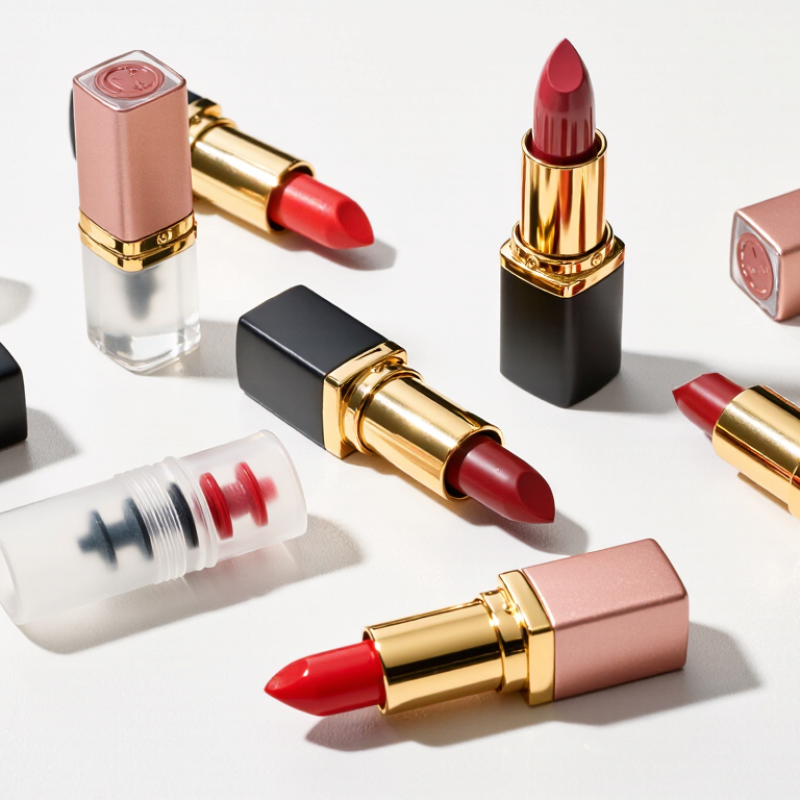
Before selecting a lipstick tube, define what the product must do.
Start with the formula, bullet size, and filling method. A creamy formula may need stronger internal support. A firm bullet may require a smoother twisting mechanism. Record the exact diameter, height, and fill weight. Small differences can cause scraping, looseness, or uneven movement. Measure the actual filled product, not only the laboratory sample. Samples can behave differently.
Your requirements should also reflect daily use.
Decide whether the tube needs one-hand opening, a secure cap, or a weighted base. Consider the finish, color, decoration, and surface texture carefully. Metallic effects can highlight fingerprints. Matte coatings may show scratches during shipping. Practical details matter. Ask how the tube performs in handbags, bathroom drawers, and warm delivery conditions. A first specification is rarely perfect.
Work with measurable standards.
Request material information, dimensional tolerances, closure testing, and compatibility data. Experienced packaging teams usually test twist cycles, cap retention, drop resistance, and heat exposure before approval. Keep written records of each result. They make supplier discussions clearer and reduce preventable changes. Do not approve a tube from appearance alone. It may look refined but feel unstable. Review the full assembly with the filled formula, printed surface, and final carton. Allow time for revisions. The cheapest option may create higher costs through waste, rework, or customer complaints.
Choosing the best lipstick tube starts with product protection, not appearance. Polypropylene is lightweight, moisture-resistant, and cost-efficient for daily use. ABS offers a harder, more polished shell, but it can show scratches. Aluminum feels premium and resists crushing, although dents remain visible. Glass creates weight and rigidity, yet it increases breakage risk during transport. Test the complete package, not just the material.
A reliable tube should protect the lipstick from heat, pressure, dust, and accidental twisting. Check the inner cup, elevator mechanism, base fit, and closure torque. ASTM D4169 distribution testing can reveal failures caused by vibration, drops, and compression. Small gaps matter. A loose cap may dry the surface or stain a handbag. The OECD Global Plastics Outlook 2022 reports that packaging creates about 40% of global plastic waste, while only 9% is recycled. Material reduction deserves serious attention, but thinner walls can weaken protection. This trade-off is easy to underestimate. Recycled content may also affect color consistency, odor, or molding performance, so request batch samples and migration documentation. My practical preference is a tube that survives repeated opening, bathroom humidity, and a one-meter drop before decoration is approved. Beauty packaging is often judged by touch, but reliability is proven under stress. Some teams still choose heavy materials for luxury appeal; that may be emotionally convincing, but not always technically justified.
| Tip | Evaluation Dimension | Material or Design Option | Typical Performance | Product Protection | Recommended Use | Key Check Before Purchase |
|---|---|---|---|---|---|---|
| 1 | Match the tube material to the product position | Aluminum | High durability Rigid, lightweight, and resistant to everyday dents and surface wear when properly finished. | Provides a strong barrier against light and physical impact. The internal component still needs to be compatible with the lipstick formula. | Premium, travel-focused, and refillable packaging concepts. | Confirm wall thickness, surface finish, coating adhesion, and resistance to dents during transport. |
| 2 | Compare impact resistance | ABS Plastic | High impact resistance Commonly used for rigid cosmetic components because it is tough and dimensionally stable. | Protects the bullet from external impact when the cap and inner mechanism fit securely. | Mass-market, premium, and customized packaging with complex shapes. | Request drop-test results and inspect the tube for cracks, deformation, and loose joints. |
| 3 | Evaluate lightweight construction | Polypropylene (PP) | Good durability Lightweight, fatigue-resistant, and generally suitable for repeated opening and closing. | Offers reliable everyday protection and good resistance to many cosmetic ingredients. | Lightweight, cost-conscious, and travel-friendly lipstick lines. | Check the PP grade, hinge or closure design, dimensional stability, and compatibility with oils and waxes. |
| 4 | Consider a lower-plastic or natural-look option | Paperboard or Fiber-Based Outer Tube | Moderate durability Can be sturdy when laminated or reinforced, but is more sensitive to moisture and crushing than metal or rigid plastic. | Suitable for dry environments; requires an effective inner barrier to protect the lipstick from moisture and contamination. | Paper-forward, minimalist, and sustainability-oriented packaging concepts. | Verify moisture resistance, compression strength, seam quality, and whether all layers are accepted in the target recycling system. |
| 5 | Choose a finish that withstands handling | Anodized or Powder-Coated Metal | High surface durability Can improve resistance to abrasion and oxidation compared with untreated metal. | Creates an additional surface barrier and helps maintain appearance during storage and use. | Luxury presentation, metallic effects, and long-life reusable tubes. | Test coating adhesion, color consistency, chemical resistance, and scratch performance after repeated handling. |
| 6 | Protect the lipstick bullet from breakage | Tight-Fit Cap and Internal Holder | Critical design feature A secure cap and stable holder reduce movement, vibration, and accidental contact with the cap. | Helps prevent smearing, chipping, deformation, and contamination of the lipstick bullet. | All lipstick formats, especially softer or high-pigment formulas. | Check cap retention, internal clearance, bullet wobble, and performance after repeated open-close cycles. |
| 7 | Assess the twist-up mechanism | Mechanism with Metal or Polymer Components | Varies by construction A well-aligned mechanism should move smoothly without excessive play, sticking, or back-sliding. | Controls bullet movement and lowers the risk of the product being exposed or damaged inside the cap. | Standard twist-up lipstick and refillable systems. | Conduct cycle testing, check extension height, evaluate noise, and inspect for residue buildup around the screw track. |
| 8 | Check formula compatibility | Inner Cup and Product-Contact Components | Formula-dependent Materials must resist swelling, cracking, odor transfer, and changes caused by oils, waxes, pigments, or fragrances. | Prevents interaction between the formula and packaging that could affect color, odor, texture, or stability. | All formulas, with extra attention to natural oils, volatile ingredients, and fragrance-containing products. | Complete compatibility testing under elevated temperature, room temperature, and low-temperature conditions. |
| 9 | Review transport and storage protection | Cushioned Secondary Packaging | Improves overall durability Protective inserts and correctly sized cartons reduce movement and impact during distribution. | Limits dents, scratches, cap separation, and bullet breakage caused by vibration or drops. | Online sales, international shipping, and products with delicate decorative finishes. | Use drop, vibration, compression, and temperature tests representative of the actual distribution route. |
| 10 | Balance sustainability with performance | Mono-Material or Refillable Construction | Depends on system design Fewer material combinations can simplify sorting, while refillable systems can reduce packaging use over multiple purchases. | Must maintain reliable closure, product hygiene, structural strength, and protection throughout the product life cycle. | Long-term packaging programs and waste-reduction initiatives. | Confirm disassembly instructions, refill fit, cleaning requirements, material labeling, and recycling availability in target markets. |
Choosing a lipstick tube should begin with the user’s hand, not only the artwork. McKinsey’s 2023 beauty report forecasts the global beauty market could reach about $590 billion by 2028. That growth increases pressure on packaging to feel practical and distinctive. A 3.5-gram tube suits daily use, while a larger format may support longer wear but add weight. Test the diameter with different hand sizes. A slim tube can look elegant, yet it may feel unstable during application.
Tip: Compare shape, grip, and balance.
Functionality should protect the bullet from heat, friction, and accidental opening. Check the winding mechanism through repeated cycles, including one-handed use. The cap should close with a clear click, but not require excessive force. A 2024 Mintel beauty packaging analysis highlights convenience and portability as continuing purchase considerations. Small details matter: a flat base prevents rolling, while a clean inner platform reduces residue. These features can lower frustration and improve perceived quality.
Tip: Test real routines, not showroom conditions.
User experience also includes sound, texture, and opening speed. Run trials with dry and moisturized hands. Ask users to open the tube inside a small bag, where visibility is poor. Some test results may disappoint, and that is useful. A luxurious finish may show fingerprints quickly. A magnetic closure may feel premium but increase weight and cost. McKinsey also notes that consumers increasingly examine value, performance, and sustainability together. Do not assume the most complex tube is the best one. A simpler mechanism may survive daily use better.
Choosing a lipstick tube begins with use, not decoration. Measure refill dimensions, bullet diameter, and closure force before approving samples. Test the tube with oils, waxes, and pigments at different temperatures. Formula migration can ruin a beautiful finish. A practical review should check twist smoothness, cap fit, drop resistance, and filling-line compatibility.
Customization should strengthen recognition without making production fragile. Consider color matching, embossing, metallic finishes, recycled content, and refillable architecture. Small details matter: a soft-touch grip, a clean click, or a visible inner mechanism can change perceived value. Still, glossy coatings collect fingerprints. Complex decoration may increase rejects and obscure recycling routes. The OECD’s Global Plastics Outlook (2022) reports that only 9% of plastic waste was recycled globally in 2019. Choose materials that local facilities can identify and process.
Brand appeal also depends on credible claims. PwC’s 2024 Voice of Consumer Survey found consumers would pay an average 9.7% more for sustainably produced or sourced goods. That signals opportunity, not permission to overclaim. Ask suppliers for recycled-content certificates, component weights, and lifecycle evidence. Pilot samples under heat, transport, and repeated-use conditions. A tube can look perfect on screen and fail in a handbag. Leave room for revision. Sometimes, the less decorated tube communicates more.
10 Tips for Choosing the Best Lipstick Tube for Your Brand
Confirm manufacturing quality before discussing appearance. A polished tube can still fail during filling, shipping, or daily use. Request production samples, material specifications, and inspection records. Check the inner cup, bullet lift, base alignment, and cap fit. A practical test includes repeated opening, closing, twisting, and a one-meter drop test. Measure torque consistently. Loose caps may cause leakage, while excessive torque frustrates users. Ask whether the supplier tests coating adhesion, color consistency, and compatibility with oils or waxes. Grand View Research’s 2024 cosmetics packaging analysis forecasts approximately 4.8% annual market growth through 2030. That growth increases supplier pressure, so documented process control matters.
Cost comparisons should include tooling, decoration, assembly, samples, freight, duties, and rejected units. A lower unit price may hide expensive molds or high defect rates. Ask for a transparent quotation. Confirm the minimum order quantity and whether it changes for custom colors or finishes. The minimum may be 10,000 units, not 1,000. Plan inventory around sales forecasts, not optimism. I have seen attractive packaging become a cash-flow problem when minimums exceed realistic demand.
Delivery terms require precise wording. Confirm sample lead time, production lead time, shipping method, inspection timing, and the agreed Incoterm. Smithers’ packaging market research consistently highlights supply-chain resilience as a purchasing concern. Build a buffer for decoration delays and port disruption. Put approved samples, tolerances, and replacement procedures into the contract. Do not rely on promises alone. Mistakes happen. Good records make them manageable.
This 100-point purchasing scorecard highlights the key factors to review when evaluating lipstick tube suppliers. Manufacturing quality receives the highest weighting because component consistency, fit, finish, and compatibility directly affect product performance. Cost, minimum order quantities, delivery terms, and compliance checks should also be confirmed before placing an order.