What are the Benefits of Using Plastic Shipping Containers for Your Business
In the ever-evolving landscape of logistics and supply chain management, the choice of shipping containers is crucial for businesses aiming to enhance efficiency and sustainability. As noted by industry expert Dr. Emily Carter, a leading authority on packaging innovations, "Plastic shipping containers represent a transformative shift in how businesses can optimize their operations while reducing their environmental footprint." This insight highlights the growing significance of these versatile containers in modern shipping practices.
Plastic shipping containers offer numerous advantages that set them apart from traditional options. They are lightweight yet durable, providing a robust solution for transporting goods across various sectors. Additionally, their resistance to moisture and chemicals ensures that products remain safe and uncontaminated during transit. The durability and reusability of plastic shipping containers contribute not only to cost savings but also to reducing waste, aligning with many companies' sustainability goals.
As businesses increasingly recognize the benefits of using plastic shipping containers, they are redefining standards within the logistics industry. By adopting these innovative solutions, companies can enhance operational efficiency, protect their products more effectively, and play a pivotal role in driving a more sustainable future for global trade.

Advantages of Plastic Shipping Containers Over Traditional Options
Plastic shipping containers have become increasingly popular in modern logistics due to their numerous advantages over traditional options like wood or metal. One of the primary benefits is their lightweight structure, which can lead to significant cost savings in shipping expenses. According to a report by the International Journal of Logistics Management, using lighter containers can reduce overall shipping costs by up to 20%, as they allow for more efficient fuel usage and enabling businesses to transport larger loads without increasing shipping fees.
Additionally, plastic containers are more durable and resistant to the elements compared to traditional materials. They do not absorb moisture, which minimizes the risk of mold and decay. A study published in the Packaging Technology and Science journal indicated that plastic containers have a lifespan that is four to five times longer than wooden alternatives, making them a sustainable choice for long-term use. This durability not only protects goods more effectively but also reduces replacement costs for businesses.
Tips: When choosing plastic shipping containers, consider their stackability and compatibility with automation systems to maximize storage efficiency. Additionally, look for containers that are made from recyclable materials, ensuring that your business practices contribute positively to environmental sustainability while also improving operational efficiency.
Cost-Effectiveness: Saving Money with Plastic Shipping Solutions
Cost-effectiveness is a primary advantage of using plastic shipping containers in business operations. These containers are not only durable and reusable but also help reduce shipping costs significantly. Unlike traditional packaging materials, plastic containers are lightweight, which leads to lower shipping fees. By minimizing the weight of shipping materials, businesses can optimize their logistics expenses without compromising on safety or quality.
Additionally, plastic containers have a longer lifespan compared to their paper or metal counterparts. This durability means that businesses do not have to constantly replace damaged or worn-out containers, leading to substantial savings over time. Furthermore, many plastic shipping solutions are designed for multiple uses, promoting sustainability in operations while cutting costs. The reduced need for single-use packaging materials contributes to lower waste disposal fees and makes a positive impact on the environment. By choosing plastic shipping containers, businesses can leverage these financial benefits while maintaining an eco-friendly approach.
Durability: How Plastic Containers Enhance Product Protection
Durability is a defining characteristic of
plastic shipping containers, making them
an ideal choice for businesses looking to enhance product protection. According to a report by the
Freedonia Group, the demand for plastic shipping containers is projected to grow by
4.9% annually, highlighting their increasing popularity in various
industries. Unlike traditional packaging materials, plastic containers exhibit superior strength
and resistance to moisture, chemicals, and extreme temperatures. This ensures that products remain intact
and undamaged during transit, ultimately reducing the risk of returns
and losses for businesses.
When selecting plastic shipping containers, consider the quality of materials used. High-density
polyethylene (HDPE) and polypropylene are excellent options as they offer
enhanced robustness and longevity. Implementing regular quality checks can ensure that the containers are
not only in good condition before shipping but also fit for repeated use.
Tip: To maximize the benefits of plastic containers,
ensure they are properly cleaned and maintained. This will not only prolong their lifespan but also maintain
hygiene standards, especially when shipping food products or sensitive items. Investing in robust plastic
containers is a smart move for any business aiming to safeguard its products while reducing long-term
packaging costs.
Environmentally Friendly: The Sustainability of Plastic Shipping Containers
The sustainability of plastic shipping containers has emerged as a significant benefit for businesses looking to enhance their environmental responsibility. Unlike traditional materials, plastic containers can be recycled and repurposed multiple times, reducing waste and the need for virgin materials. By adopting plastic shipping containers, companies can minimize their carbon footprint while meeting increasing consumer demands for eco-friendly practices.
Moreover, many modern plastic containers are designed with sustainability in mind, using materials that are not only durable but also environmentally conscious. Innovations in production processes have led to the development of biodegradable and recyclable plastics, making it easier for businesses to align with sustainable practices. Utilizing these containers not only supports global efforts to reduce plastic pollution but also communicates a commitment to environmental stewardship to consumers, positively influencing brand perception and loyalty.
Benefits of Using Plastic Shipping Containers for Your Business
This chart illustrates the various benefits of using plastic shipping containers in business operations, showcasing their efficiency, durability, and sustainability.
Versatility: Adapting Plastic Containers for Various Business Needs
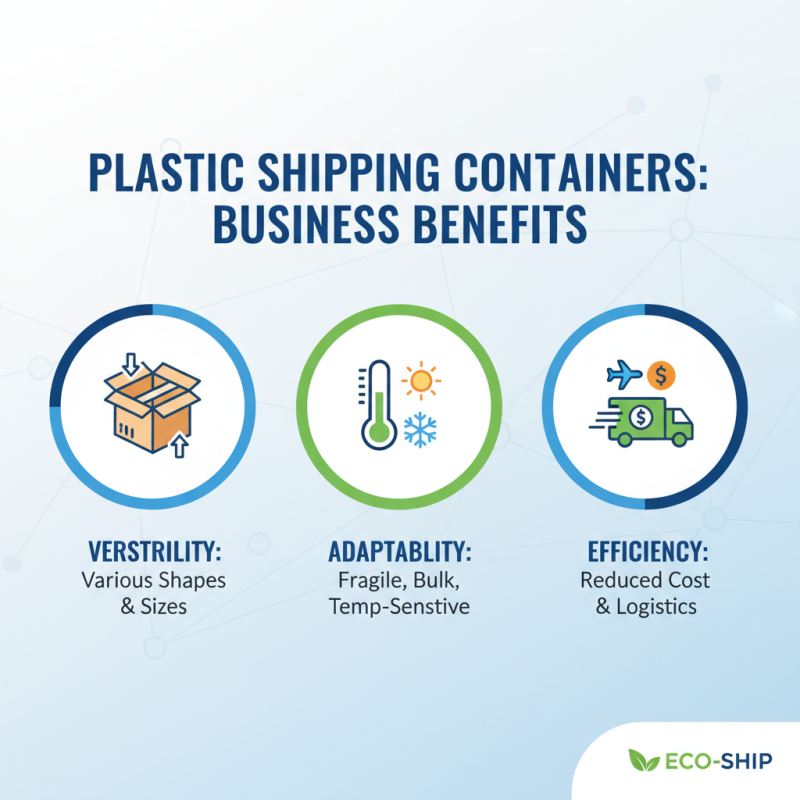
Plastic shipping containers offer remarkable versatility, making them an ideal choice for various business needs. These containers come in a range of shapes and sizes, allowing companies to select the perfect fit for their products. Whether transporting fragile items, bulk goods, or temperature-sensitive materials, plastic containers can be tailored to suit specific requirements. Their lightweight nature not only reduces shipping costs but also enhances the efficiency of logistics operations.
Moreover, plastic shipping containers are designed for easy stacking and nesting, maximizing space utilization during storage and transportation. This adaptability is especially beneficial for businesses looking to optimize their supply chain processes. Additionally, many plastic containers are reusable and recyclable, contributing to sustainable practices that are increasingly important in today's market. By integrating plastic shipping containers into their operations, businesses can not only streamline their logistics but also promote eco-friendly initiatives, aligning themselves with consumer preferences for sustainability.